
Seborrhoeic Keratoses: The Skin Growth Almost Everyone Gets (But Nobody Talks About)
Seborrhoeic Keratoses: The Skin Growth Almost Everyone Gets (But Nobody Talks About)
Seborrhoeic Keratoses: The Skin Growth Almost Everyone Gets (But Nobody Talks About)
Seborrhoeic Keratoses: The Skin Growth Almost Everyone Gets (But Nobody Talks About)
There’s a particular kind of skin change that tends to arrive quietly. It doesn’t hurt. It doesn’t make headlines. It simply appears one day and refuses to leave. Often rough, sometimes waxy, occasionally darker than the surrounding skin, seborrhoeic keratoses are one of the most common benign skin growths seen in adults — and yet they’re rarely talked about openly.
Part of the reason for this silence is that many people don’t actually recognise what they’re looking at. Seborrhoeic keratoses (often called “seb k”) are frequently mistaken for moles, warts, age spots, or something more concerning. They don’t always fit neatly into what people think of as “normal” skin changes, which can make them quietly unsettling.
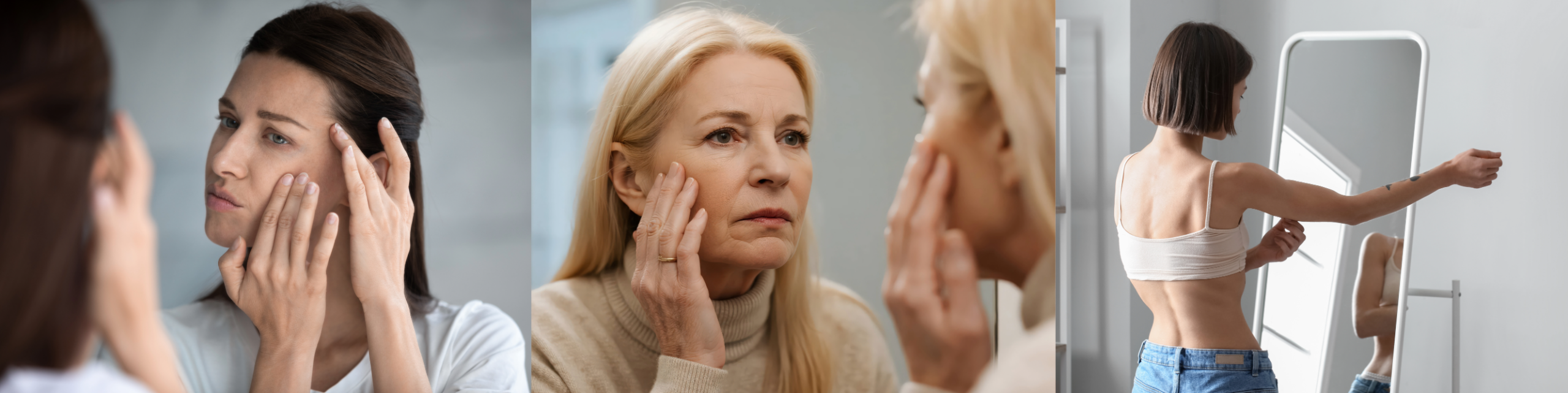
Many people first notice one while applying makeup, shaving, or catching their reflection in strong daylight. At first, it’s easy to dismiss it. Then it changes slightly in texture, or becomes more noticeable. What often follows is a period of private uncertainty. Is it normal? Should it be checked? Is it something that needs a doctor? And, for some, a deeper worry sits underneath — what if it’s something more sinister?
Seborrhoeic keratoses are entirely harmless. They are not contagious, they are not cancerous, and they are not caused by poor skin care. They’re simply one of those changes that come with time. Some people develop just one or two; others find they build up gradually over the years. Genetics plays a role, as does age, and sun exposure may contribute, but often there is no single clear cause. They appear when they appear.

That reassurance, however, doesn’t always come easily. Many people delay having a growth looked at because they’re worried about what they might be told, or because they assume the process will be complicated, expensive, or lead automatically to treatment they’re not ready for. In reality, as a trained advanced electrologist, I can usually identify seborrhoeic keratoses very quickly during an initial consultation, with no obligation to go any further if reassurance is all that’s needed.
What makes seborrhoeic keratoses particularly frustrating is their texture. Unlike freckles or flat pigmentation, they sit on the surface of the skin — often raised, uneven, or slightly crumbly to the touch . Even when small, they can feel far more noticeable than you’d expect , especially on the face, neck, chest, or scalp, where they draw attention and catch on clothing or jewellery.
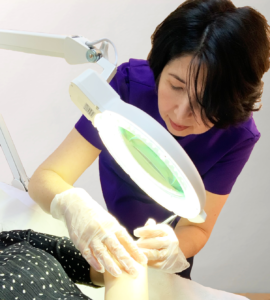 What often surprises people is how straightforward it actually is to deal with them. Treatment is usually quick and far simpler than expected, with no cutting, no stitches, and no lengthy recovery. The skin is allowed to do what it does best — repair itself — with minimal disruption. For visible areas, this precision matters, and it’s often the difference between feeling anxious about treatment and feeling quietly relieved.
There’s also a common assumption that a dermatologist is always required. While dermatologists play an essential role in assessing changing or suspicious lesions, seborrhoeic keratoses are typically very distinctive. When correctly identified, they can be treated safely and effectively without long waiting lists, high consultation fees, or any pressure to proceed if reassurance is all that’s needed.
What’s striking is how often people live with these growths for years simply because they don’t realise removal can be quick and uncomplicated. Many clients describe a sense of resignation — as though it’s just something they have to put up with. Yet once removed, the relief is often immediate. Not dramatic, not life-changing, but quietly satisfying. Skin feels smoother. Clothing stops catching. Mirrors feel kinder.
After treatment, most people experience only mild redness and a small scab that resolves naturally. There is no need to hide away or put life on hold. The aim isn’t to “erase age” or chase perfection but to restore comfort and confidence in one’s own skin.
Seborrhoeic keratoses may be common, but that doesn’t mean they should be ignored if they cause concern or irritation. Skin is personal. What feels insignificant to one person can feel deeply unsettling to another. The important thing is knowing that reassurance is easy to access, options are gentle, and nothing has to be decided in a rush.
Sometimes, peace of mind begins with a conversation and a closer look. And sometimes, it begins with realising that the thing you’ve quietly tolerated for years doesn’t actually have to stay.
There’s a particular kind of skin change that tends to arrive quietly. It doesn’t hurt. It doesn’t make headlines. It simply appears one day and refuses to leave. Often rough, sometimes waxy, occasionally darker than the surrounding skin, seborrhoeic keratoses are one of the most common benign skin growths seen in adults — and yet they’re rarely talked about openly.
Part of the reason for this silence is that many people don’t actually recognise what they’re looking at. Seborrhoeic keratoses (often called “seb k”) are frequently mistaken for moles, warts, age spots, or something more concerning. They don’t always fit neatly into what people think of as “normal” skin changes, which can make them quietly unsettling.
Many people first notice one while applying makeup, shaving, or catching their reflection in strong daylight. At first, it’s easy to dismiss it. Then it changes slightly in texture, or becomes more noticeable. What often follows is a period of private uncertainty. Is it normal? Should it be checked? Is it something that needs a doctor? And, for some, a deeper worry sits underneath — what if it’s something more sinister?
Seborrhoeic keratoses are entirely harmless. They are not contagious, they are not cancerous, and they are not caused by poor skin care. They’re simply one of those changes that come with time. Some people develop just one or two; others find they build up gradually over the years. Genetics plays a role, as does age, and sun exposure may contribute, but often there is no single clear cause. They appear when they appear.
That reassurance, however, doesn’t always come easily. Many people delay having a growth looked at because they’re worried about what they might be told, or because they assume the process will be complicated, expensive, or lead automatically to treatment they’re not ready for. In reality, as a trained advanced electrologist, I can usually identify seborrhoeic keratoses very quickly during an initial consultation, with no obligation to go any further if reassurance is all that’s needed.
What makes seborrhoeic keratoses particularly frustrating is their texture. Unlike freckles or flat pigmentation, they sit on the surface of the skin — often raised, uneven, or slightly crumbly to the touch . Even when small, they can feel far more noticeable than you’d expect , especially on the face, neck, chest, or scalp, where they draw attention and catch on clothing or jewellery.
What often surprises people is how straightforward it actually is to deal with them. Treatment is usually quick and far simpler than expected, with no cutting, no stitches, and no lengthy recovery. The skin is allowed to do what it does best — repair itself — with minimal disruption. For visible areas, this precision matters, and it’s often the difference between feeling anxious about treatment and feeling quietly relieved.
There’s also a common assumption that a dermatologist is always required. While dermatologists play an essential role in assessing changing or suspicious lesions, seborrhoeic keratoses are typically very distinctive. When correctly identified, they can be treated safely and effectively without long waiting lists, high consultation fees, or any pressure to proceed if reassurance is all that’s needed.
What’s striking is how often people live with these growths for years simply because they don’t realise removal can be quick and uncomplicated. Many clients describe a sense of resignation — as though it’s just something they have to put up with. Yet once removed, the relief is often immediate. Not dramatic, not life-changing, but quietly satisfying. Skin feels smoother. Clothing stops catching. Mirrors feel kinder.
After treatment, most people experience only mild redness and a small scab that resolves naturally. There is no need to hide away or put life on hold. The aim isn’t to “erase age” or chase perfection but to restore comfort and confidence in one’s own skin.
Seborrhoeic keratoses may be common, but that doesn’t mean they should be ignored if they cause concern or irritation. Skin is personal. What feels insignificant to one person can feel deeply unsettling to another. The important thing is knowing that reassurance is easy to access, options are gentle, and nothing has to be decided in a rush.
Sometimes, peace of mind begins with a conversation and a closer look. And sometimes, it begins with realising that the thing you’ve quietly tolerated for years doesn’t actually have to stay.
There’s a particular kind of skin change that tends to arrive quietly. It doesn’t hurt. It doesn’t make headlines. It simply appears one day and refuses to leave. Often rough, sometimes waxy, occasionally darker than the surrounding skin, seborrhoeic keratoses are one of the most common benign skin growths seen in adults — and yet they’re rarely talked about openly.
Part of the reason for this silence is that many people don’t actually recognise what they’re looking at. Seborrhoeic keratoses (often called “seb k”) are frequently mistaken for moles, warts, age spots, or something more concerning. They don’t always fit neatly into what people think of as “normal” skin changes, which can make them quietly unsettling.
Many people first notice one while applying makeup, shaving, or catching their reflection in strong daylight. At first, it’s easy to dismiss it. Then it changes slightly in texture, or becomes more noticeable. What often follows is a period of private uncertainty. Is it normal? Should it be checked? Is it something that needs a doctor? And, for some, a deeper worry sits underneath — what if it’s something more sinister?
Seborrhoeic keratoses are entirely harmless. They are not contagious, they are not cancerous, and they are not caused by poor skin care. They’re simply one of those changes that come with time. Some people develop just one or two; others find they build up gradually over the years. Genetics plays a role, as does age, and sun exposure may contribute, but often there is no single clear cause. They appear when they appear.
That reassurance, however, doesn’t always come easily. Many people delay having a growth looked at because they’re worried about what they might be told, or because they assume the process will be complicated, expensive, or lead automatically to treatment they’re not ready for. In reality, as a trained advanced electrologist, I can usually identify seborrhoeic keratoses very quickly during an initial consultation, with no obligation to go any further if reassurance is all that’s needed.
What makes seborrhoeic keratoses particularly frustrating is their texture. Unlike freckles or flat pigmentation, they sit on the surface of the skin — often raised, uneven, or slightly crumbly to the touch . Even when small, they can feel far more noticeable than you’d expect , especially on the face, neck, chest, or scalp, where they draw attention and catch on clothing or jewellery.
What often surprises people is how straightforward it actually is to deal with them. Treatment is usually quick and far simpler than expected, with no cutting, no stitches, and no lengthy recovery. The skin is allowed to do what it does best — repair itself — with minimal disruption. For visible areas, this precision matters, and it’s often the difference between feeling anxious about treatment and feeling quietly relieved.
There’s also a common assumption that a dermatologist is always required. While dermatologists play an essential role in assessing changing or suspicious lesions, seborrhoeic keratoses are typically very distinctive. When correctly identified, they can be treated safely and effectively without long waiting lists, high consultation fees, or any pressure to proceed if reassurance is all that’s needed.
What’s striking is how often people live with these growths for years simply because they don’t realise removal can be quick and uncomplicated. Many clients describe a sense of resignation — as though it’s just something they have to put up with. Yet once removed, the relief is often immediate. Not dramatic, not life-changing, but quietly satisfying. Skin feels smoother. Clothing stops catching. Mirrors feel kinder.
After treatment, most people experience only mild redness and a small scab that resolves naturally. There is no need to hide away or put life on hold. The aim isn’t to “erase age” or chase perfection but to restore comfort and confidence in one’s own skin.
Seborrhoeic keratoses may be common, but that doesn’t mean they should be ignored if they cause concern or irritation. Skin is personal. What feels insignificant to one person can feel deeply unsettling to another. The important thing is knowing that reassurance is easy to access, options are gentle, and nothing has to be decided in a rush.
Sometimes, peace of mind begins with a conversation and a closer look. And sometimes, it begins with realising that the thing you’ve quietly tolerated for years doesn’t actually have to stay.
There’s a particular kind of skin change that tends to arrive quietly. It doesn’t hurt. It doesn’t make headlines. It simply appears one day and refuses to leave. Often rough, sometimes waxy, occasionally darker than the surrounding skin, seborrhoeic keratoses are one of the most common benign skin growths seen in adults — and yet they’re rarely talked about openly.
Part of the reason for this silence is that many people don’t actually recognise what they’re looking at. Seborrhoeic keratoses (often called “seb k”) are frequently mistaken for moles, warts, age spots, or something more concerning. They don’t always fit neatly into what people think of as “normal” skin changes, which can make them quietly unsettling.
Many people first notice one while applying makeup, shaving, or catching their reflection in strong daylight. At first, it’s easy to dismiss it. Then it changes slightly in texture, or becomes more noticeable. What often follows is a period of private uncertainty. Is it normal? Should it be checked? Is it something that needs a doctor? And, for some, a deeper worry sits underneath — what if it’s something more sinister?
Seborrhoeic keratoses are entirely harmless. They are not contagious, they are not cancerous, and they are not caused by poor skin care. They’re simply one of those changes that come with time. Some people develop just one or two; others find they build up gradually over the years. Genetics plays a role, as does age, and sun exposure may contribute, but often there is no single clear cause. They appear when they appear.
That reassurance, however, doesn’t always come easily. Many people delay having a growth looked at because they’re worried about what they might be told, or because they assume the process will be complicated, expensive, or lead automatically to treatment they’re not ready for. In reality, as a trained advanced electrologist, I can usually identify seborrhoeic keratoses very quickly during an initial consultation, with no obligation to go any further if reassurance is all that’s needed.
What makes seborrhoeic keratoses particularly frustrating is their texture. Unlike freckles or flat pigmentation, they sit on the surface of the skin — often raised, uneven, or slightly crumbly to the touch . Even when small, they can feel far more noticeable than you’d expect , especially on the face, neck, chest, or scalp, where they draw attention and catch on clothing or jewellery.
What often surprises people is how straightforward it actually is to deal with them. Treatment is usually quick and far simpler than expected, with no cutting, no stitches, and no lengthy recovery. The skin is allowed to do what it does best — repair itself — with minimal disruption. For visible areas, this precision matters, and it’s often the difference between feeling anxious about treatment and feeling quietly relieved.
There’s also a common assumption that a dermatologist is always required. While dermatologists play an essential role in assessing changing or suspicious lesions, seborrhoeic keratoses are typically very distinctive. When correctly identified, they can be treated safely and effectively without long waiting lists, high consultation fees, or any pressure to proceed if reassurance is all that’s needed.
What’s striking is how often people live with these growths for years simply because they don’t realise removal can be quick and uncomplicated. Many clients describe a sense of resignation — as though it’s just something they have to put up with. Yet once removed, the relief is often immediate. Not dramatic, not life-changing, but quietly satisfying. Skin feels smoother. Clothing stops catching. Mirrors feel kinder.
After treatment, most people experience only mild redness and a small scab that resolves naturally. There is no need to hide away or put life on hold. The aim isn’t to “erase age” or chase perfection but to restore comfort and confidence in one’s own skin.
Seborrhoeic keratoses may be common, but that doesn’t mean they should be ignored if they cause concern or irritation. Skin is personal. What feels insignificant to one person can feel deeply unsettling to another. The important thing is knowing that reassurance is easy to access, options are gentle, and nothing has to be decided in a rush.
Sometimes, peace of mind begins with a conversation and a closer look. And sometimes, it begins with realising that the thing you’ve quietly tolerated for years doesn’t actually have to stay.