Electrolysis for PCOS
Permanent Hair Removal for Hormonal Hair Growth

Electrolysis for PCOS
Permanent Hair Removal for Hormonal Hair Growth
Electrolysis for PCOS
Permanent Hair Removal for Hormonal Hair Growth
Electrolysis for PCOS
Permanent Hair Removal for Hormonal Hair Growth
PCOS & Excess Hair Growth
PCOS-related hair growth can be persistent and distressing. Unwanted facial or body hair often goes beyond appearance, affecting how you feel about yourself and becoming something you have to think about and manage every day.
We support many clients with PCOS and understand how frustrating it can be to deal with hair that keeps returning despite years of shaving, waxing, or plucking. The good news is that there is a permanent solution.
Electrolysis is the only medically recognised method of permanent hair removal and is suitable for managing unwanted hair caused by hormonal conditions such as PCOS.

PCOS & Excess Hair Growth
PCOS-related hair growth can be persistent and distressing. Unwanted facial or body hair often goes beyond appearance, affecting how you feel about yourself and becoming something you have to think about and manage every day.
We support many clients with PCOS and understand how frustrating it can be to deal with hair that keeps returning despite years of shaving, waxing, or plucking. The good news is that there is a permanent solution.
Electrolysis is the only medically recognised method of permanent hair removal and is suitable for managing unwanted hair caused by hormonal conditions such as PCOS.
PCOS & Excess Hair Growth
PCOS-related hair growth can be persistent and distressing. Unwanted facial or body hair often goes beyond appearance, affecting how you feel about yourself and becoming something you have to think about and manage every day.
We support many clients with PCOS and understand how frustrating it can be to deal with hair that keeps returning despite years of shaving, waxing, or plucking. The good news is that there is a permanent solution.
Electrolysis is the only medically recognised method of permanent hair removal and is suitable for managing unwanted hair caused by hormonal conditions such as PCOS.
PCOS & Excess Hair Growth
PCOS-related hair growth can be persistent and distressing. Unwanted facial or body hair often goes beyond appearance, affecting how you feel about yourself and becoming something you have to think about and manage every day.
We support many clients with PCOS and understand how frustrating it can be to deal with hair that keeps returning despite years of shaving, waxing, or plucking. The good news is that there is a permanent solution.
Electrolysis is the only medically recognised method of permanent hair removal and is suitable for managing unwanted hair caused by hormonal conditions such as PCOS.
Why Electrolysis Is Effective for PCOS
Unlike temporary hair removal methods, electrolysis treats the hair follicle directly. Each follicle is carefully treated with a small electrical current that disables its ability to produce hair again. Once a follicle has been successfully treated, that hair does not return.
Because electrolysis does not rely on pigment, it works on all hair colours — including blonde, red, grey, and fine hairs — and is safe for all skin tones. This makes it particularly suitable for PCOS-related hair growth, which is often resistant to other treatments.
This makes electrolysis a reliable, long-term option for managing unwanted hair caused by PCOS.

How Electrolysis Works
Electrolysis treats each hair individually using a very fine, sterile, single-use probe.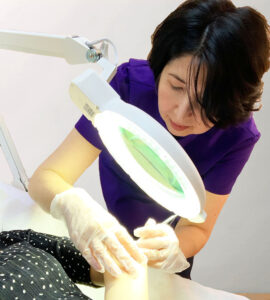
The probe is gently inserted into the natural opening of the hair follicle — nothing is punctured or forced. A small electrical current is then applied to destroy the part of the follicle responsible for hair growth. The hair is removed with tweezers and should slide out easily, without pulling.
Hair grows in cycles, which means not all hairs are visible at the same time. This is why treatment takes place over a period of time. When electrolysis is carried out correctly and consistently, treated hairs do not return.
Why Electrolysis Is Effective for PCOS
Unlike temporary hair removal methods, electrolysis treats the hair follicle directly. Each follicle is carefully treated with a small electrical current that disables its ability to produce hair again. Once a follicle has been successfully treated, that hair does not return.
Because electrolysis does not rely on pigment, it works on all hair colours — including blonde, red, grey, and fine hairs — and is safe for all skin tones. This makes it particularly suitable for PCOS-related hair growth, which is often resistant to other treatments.
This makes electrolysis a reliable, long-term option for managing unwanted hair caused by PCOS.
How Electrolysis Works
Electrolysis treats each hair individually using a very fine, sterile, single-use probe.
The probe is gently inserted into the natural opening of the hair follicle — nothing is punctured or forced. A small electrical current is then applied to destroy the part of the follicle responsible for hair growth. The hair is removed with tweezers and should slide out easily, without pulling.
Hair grows in cycles, which means not all hairs are visible at the same time. This is why treatment takes place over a period of time. When electrolysis is carried out correctly and consistently, treated hairs do not return.
Why Electrolysis Is Effective for PCOS
Unlike temporary hair removal methods, electrolysis treats the hair follicle directly. Each follicle is carefully treated with a small electrical current that disables its ability to produce hair again. Once a follicle has been successfully treated, that hair does not return.
Because electrolysis does not rely on pigment, it works on all hair colours — including blonde, red, grey, and fine hairs — and is safe for all skin tones. This makes it particularly suitable for PCOS-related hair growth, which is often resistant to other treatments.
This makes electrolysis a reliable, long-term option for managing unwanted hair caused by PCOS.
How Electrolysis Works
Electrolysis treats each hair individually using a very fine, sterile, single-use probe.
The probe is gently inserted into the natural opening of the hair follicle — nothing is punctured or forced. A small electrical current is then applied to destroy the part of the follicle responsible for hair growth. The hair is removed with tweezers and should slide out easily, without pulling.
Hair grows in cycles, which means not all hairs are visible at the same time. This is why treatment takes place over a period of time. When electrolysis is carried out correctly and consistently, treated hairs do not return.
Why Electrolysis Is Effective for PCOS
Unlike temporary hair removal methods, electrolysis treats the hair follicle directly. Each follicle is carefully treated with a small electrical current that disables its ability to produce hair again. Once a follicle has been successfully treated, that hair does not return.
Because electrolysis does not rely on pigment, it works on all hair colours — including blonde, red, grey, and fine hairs — and is safe for all skin tones. This makes it particularly suitable for PCOS-related hair growth, which is often resistant to other treatments.
This makes electrolysis a reliable, long-term option for managing unwanted hair caused by PCOS.
How Electrolysis Works
Electrolysis treats each hair individually using a very fine, sterile, single-use probe.
The probe is gently inserted into the natural opening of the hair follicle — nothing is punctured or forced. A small electrical current is then applied to destroy the part of the follicle responsible for hair growth. The hair is removed with tweezers and should slide out easily, without pulling.
Hair grows in cycles, which means not all hairs are visible at the same time. This is why treatment takes place over a period of time. When electrolysis is carried out correctly and consistently, treated hairs do not return.
What to Expect From PCOS Electrolysis Treatment
Starting any new treatment can feel like a big step, particularly when hormonal hair growth has been an ongoing issue. That’s why we offer a free consultation, which includes a complimentary 10-minute trial treatment.
This gives you the opportunity to talk things through, ask questions, and experience how electrolysis feels before deciding how you’d like to proceed.
During your consultation, we’ll:
Review your health history
Discuss the areas of most concern
Talk through your hair growth pattern
Explain how electrolysis works in practice
Create a treatment plan that feels right for you
There’s no pressure and no obligation.
If you’d like more detail before deciding, you can also read our FAQs or our aftercare advice.
What to Expect From PCOS Electrolysis Treatment
Starting any new treatment can feel like a big step, particularly when hormonal hair growth has been an ongoing issue. That’s why we offer a free consultation, which includes a complimentary 10-minute trial treatment.
This gives you the opportunity to talk things through, ask questions, and experience how electrolysis feels before deciding how you’d like to proceed.
During your consultation, we’ll:
Review your health history
Discuss the areas of most concern
Talk through your hair growth pattern
Explain how electrolysis works in practice
Create a treatment plan that feels right for you
There’s no pressure and no obligation.
If you’d like more detail before deciding, you can also read our FAQs or our aftercare advice.
What to Expect From PCOS Electrolysis Treatment
Starting any new treatment can feel like a big step, particularly when hormonal hair growth has been an ongoing issue. That’s why we offer a free consultation, which includes a complimentary 10-minute trial treatment.
This gives you the opportunity to talk things through, ask questions, and experience how electrolysis feels before deciding how you’d like to proceed.
During your consultation, we’ll:
Review your health history
Discuss the areas of most concern
Talk through your hair growth pattern
Explain how electrolysis works in practice
Create a treatment plan that feels right for you
There’s no pressure and no obligation.
If you’d like more detail before deciding, you can also read our FAQs or our aftercare advice.
What to Expect From PCOS Electrolysis Treatment
Starting any new treatment can feel like a big step, particularly when hormonal hair growth has been an ongoing issue. That’s why we offer a free consultation, which includes a complimentary 10-minute trial treatment.
This gives you the opportunity to talk things through, ask questions, and experience how electrolysis feels before deciding how you’d like to proceed.
During your consultation, we’ll:
Review your health history
Discuss the areas of most concern
Talk through your hair growth pattern
Explain how electrolysis works in practice
Create a treatment plan that feels right for you
There’s no pressure and no obligation.
If you’d like more detail before deciding, you can also read our FAQs or our aftercare advice.
How Many Sessions Will I Need?
Electrolysis is not a quick fix, but it is effective.  Because each follicle is treated individually, multiple sessions are required to achieve full clearance.
The number of treatments needed varies depending on:
Hair thickness and density
Hormonal activity and fluctuations
The area being treated
We’ll go through this clearly during your consultation so you know what to expect from the outset, with realistic timescales and ongoing support throughout treatment.
Why Electrolysis Is the Right Choice for PCOS
Electrolysis is the only method of hair removal that is medically recognised as permanent.
It works on all hair colours and all skin tones, including hair that laser cannot treat. Once treatment is complete, there is no ongoing maintenance, no repeated irritation, and no need to keep returning for top-ups.
For many people with PCOS, electrolysis offers long-term relief from the cycle of temporary hair removal and the confidence that comes with knowing the hair will not return.
For further information and independent support around PCOS, you may also find the resources at Verity helpful.
How Many Sessions Will I Need?
Electrolysis is not a quick fix, but it is effective.  Because each follicle is treated individually, multiple sessions are required to achieve full clearance.
The number of treatments needed varies depending on:
Hair thickness and density
Hormonal activity and fluctuations
The area being treated
We’ll go through this clearly during your consultation so you know what to expect from the outset, with realistic timescales and ongoing support throughout treatment.
Why Electrolysis Is the Right Choice for PCOS
Electrolysis is the only method of hair removal that is medically recognised as permanent.
It works on all hair colours and all skin tones, including hair that laser cannot treat. Once treatment is complete, there is no ongoing maintenance, no repeated irritation, and no need to keep returning for top-ups.
For many people with PCOS, electrolysis offers long-term relief from the cycle of temporary hair removal and the confidence that comes with knowing the hair will not return.
For further information and independent support around PCOS, you may also find the resources at Verity helpful.
How Many Sessions Will I Need?
Electrolysis is not a quick fix, but it is effective. Because each follicle is treated individually, multiple sessions are required to achieve full clearance.
The number of treatments needed varies depending on:
Hair thickness and density
Hormonal activity and fluctuations
The area being treated
We’ll go through this clearly during your consultation so you know what to expect from the outset, with realistic timescales and ongoing support throughout treatment.
Why Electrolysis Is the Right Choice for PCOS
Electrolysis is the only method of hair removal that is medically recognised as permanent.
It works on all hair colours and all skin tones, including hair that laser cannot treat. Once treatment is complete, there is no ongoing maintenance, no repeated irritation, and no need to keep returning for top-ups.
For many people with PCOS, electrolysis offers long-term relief from the cycle of temporary hair removal and the confidence that comes with knowing the hair will not return.
For further information and independent support around PCOS, you may also find the resources at Verity helpful.
How Many Sessions Will I Need?
Electrolysis is not a quick fix, but it is effective. Because each follicle is treated individually, multiple sessions are required to achieve full clearance.
The number of treatments needed varies depending on:
Hair thickness and density
Hormonal activity and fluctuations
The area being treated
We’ll go through this clearly during your consultation so you know what to expect from the outset, with realistic timescales and ongoing support throughout treatment.
Why Electrolysis Is the Right Choice for PCOS
Electrolysis is the only method of hair removal that is medically recognised as permanent.
It works on all hair colours and all skin tones, including hair that laser cannot treat. Once treatment is complete, there is no ongoing maintenance, no repeated irritation, and no need to keep returning for top-ups.
For many people with PCOS, electrolysis offers long-term relief from the cycle of temporary hair removal and the confidence that comes with knowing the hair will not return.
For further information and independent support around PCOS, you may also find the resources at Verity helpful.
Understanding PCOS & Unwanted Hair
 PCOS (Polycystic Ovary Syndrome) is a common hormonal condition that can lead to increased levels of androgens, which may cause unwanted hair growth in areas such as the face, chin, chest, abdomen, or back.
Other symptoms of PCOS can include irregular periods, weight changes, insulin resistance, fertility challenges, and ovarian cysts (although not everyone with PCOS has cysts).
Every case of PCOS is different. Diagnosis usually involves a review of symptoms, blood tests, and sometimes an ultrasound. If you think you may have PCOS, it’s always advisable to speak with your GP.
Understanding PCOS & Unwanted Hair
PCOS (Polycystic Ovary Syndrome) is a common hormonal condition that can lead to increased levels of androgens, which may cause unwanted hair growth in areas such as the face, chin, chest, abdomen, or back.
Other symptoms of PCOS can include irregular periods, weight changes, insulin resistance, fertility challenges, and ovarian cysts (although not everyone with PCOS has cysts).
Every case of PCOS is different. Diagnosis usually involves a review of symptoms, blood tests, and sometimes an ultrasound. If you think you may have PCOS, it’s always advisable to speak with your GP.
Understanding PCOS & Unwanted Hair
PCOS (Polycystic Ovary Syndrome) is a common hormonal condition that can lead to increased levels of androgens, which may cause unwanted hair growth in areas such as the face, chin, chest, abdomen, or back.
Other symptoms of PCOS can include irregular periods, weight changes, insulin resistance, fertility challenges, and ovarian cysts (although not everyone with PCOS has cysts).
Every case of PCOS is different. Diagnosis usually involves a review of symptoms, blood tests, and sometimes an ultrasound. If you think you may have PCOS, it’s always advisable to speak with your GP.
Understanding PCOS & Unwanted Hair
 PCOS (Polycystic Ovary Syndrome) is a common hormonal condition that can lead to increased levels of androgens, which may cause unwanted hair growth in areas such as the face, chin, chest, abdomen, or back.
Other symptoms of PCOS can include irregular periods, weight changes, insulin resistance, fertility challenges, and ovarian cysts (although not everyone with PCOS has cysts).
Every case of PCOS is different. Diagnosis usually involves a review of symptoms, blood tests, and sometimes an ultrasound. If you think you may have PCOS, it’s always advisable to speak with your GP.
Book a Free Consultation
Book a Free Consultation
Book a Free Consultation

If you’re dealing with unwanted hair caused by PCOS, you don’t have to manage it alone. We’re here to help with a permanent, proven treatment and clear, honest guidance throughout the process.
Your free consultation includes:
A health assessment
A personalised treatment plan
A complimentary 10-minute electrolysis session
This allows you to see how your skin responds and decide whether electrolysis feels right for you.
There’s no pressure and no obligation.

If you’re dealing with unwanted hair caused by PCOS, you don’t have to manage it alone. We’re here to help with a permanent, proven treatment and clear, honest guidance throughout the process.
Your free consultation includes:
A health assessment
A personalised treatment plan
A complimentary 10-minute electrolysis session
This allows you to see how your skin responds and decide whether electrolysis feels right for you.
There’s no pressure and no obligation.
If you’re dealing with unwanted hair caused by PCOS, you don’t have to manage it alone. We’re here to help with a permanent, proven treatment and clear, honest guidance throughout the process.
Your free consultation includes:
A health assessment
A personalised treatment plan
A complimentary 10-minute electrolysis session
This allows you to see how your skin responds and decide whether electrolysis feels right for you.
There’s no pressure and no obligation.
Book a Free Consultation
 If you’re dealing with unwanted hair caused by PCOS, you don’t have to manage it alone. We’re here to help with a permanent, proven treatment and clear, honest guidance throughout the process.
Your free consultation includes:
A health assessment
A personalised treatment plan
A complimentary 10-minute electrolysis session
This allows you to see how your skin responds and decide whether electrolysis feels right for you.
There’s no pressure and no obligation.
contact Us
We’re based in Chichester, West Sussex, and see clients from across the surrounding areas, including Havant, Petersfield, and Gosport.
If you’d like to ask a question, discuss PCOS-related hair growth, or arrange a free consultation, please get in touch.
 Call 07434 865 389 or
  email/text leahelectrolysis@gmail.com.
Treatments are by appointment only.
For opening hours, directions, and full contact details, visit our Contact Page.
contact Us
We’re based in Chichester, West Sussex, and see clients from across the surrounding areas, including Havant, Petersfield, and Gosport.
If you’d like to ask a question, discuss PCOS-related hair growth, or arrange a free consultation, please get in touch.
Call 07434 865 389 or email/text leahelectrolysis@gmail.com.
Treatments are by appointment only.
For opening hours, directions, and full contact details, visit our Contact Page.
contact Us
We’re based in Chichester, West Sussex, and see clients from across the surrounding areas, including Havant, Petersfield, and Gosport.
If you’d like to ask a question, discuss PCOS-related hair growth, or arrange a free consultation, please get in touch.
Call 07434 865 389 or email/text leahelectrolysis@gmail.com.
Treatments are by appointment only.
For opening hours, directions, and full contact details, visit our Contact Page.
contact Us
We’re based in Chichester, West Sussex, and see clients from across the surrounding areas, including Havant, Petersfield, and Gosport.
If you’d like to ask a question, discuss PCOS-related hair growth, or arrange a free consultation, please get in touch.
Call 07434 865 389 or email/text leahelectrolysis@gmail.com.
Treatments are by appointment only.
For opening hours, directions, and full contact details, visit our Contact Page.