

The Mole You’ve Been Keeping an Eye On
The Mole You’ve Been Keeping an Eye On
The Mole You’ve Been Keeping an Eye On
The Mole You’ve Been Keeping an Eye On
Mole skin check – A lot of people have a mole they keep an eye on. One they’ve known about for years, that catches slightly when shaving, rubs on clothing, or just seems to stand out more than it used to. It may not hurt, and it may not have changed in any obvious way, but it’s there — and it’s hard not to notice it once you’ve started paying attention.
Moles are very common, and most are completely harmless. Even so, they can still cause worry. People often hesitate to mention them, unsure whether they’re overreacting or wasting anyone’s time. There can also be a fear of being told something is wrong, which makes it easier to put things off rather than ask for reassurance.

What usually sits underneath that hesitation is uncertainty rather than panic. How much change is normal? What does “keeping an eye on it” actually mean? And at what point is it sensible to have something checked, rather than continuing to wonder about it?
Keeping an eye on a mole is something many people do, often for a long time. You might check it occasionally in the mirror, notice it in certain lighting, or compare it to how you remember it looking before. The difficulty is that this kind of watching can be vague and unsettling. Without something to compare it to, it’s hard to know whether anything has really changed or whether you’re simply noticing it more.
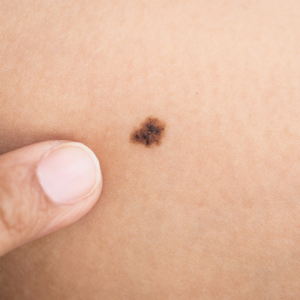
This is where uncertainty tends to creep in. You may tell yourself that you’ll wait a bit longer, or that you’ll mention it “next time”. In the meantime, the question doesn’t go away. For some people, that ongoing doubt is more uncomfortable than the idea of having it looked at properly.
For others, the hesitation comes from not wanting to overreact. There’s a common feeling that unless something looks obviously wrong, it isn’t worth bothering a professional about. In reality, reassurance is a perfectly reasonable reason to seek advice. Having something checked doesn’t mean you’re committing to treatment, and it doesn’t automatically lead to anything further being done.
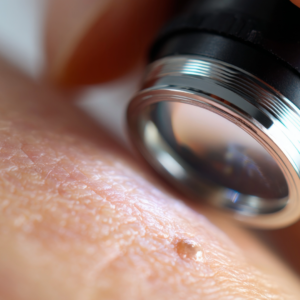
This is exactly where a professional skin check can help. A mole or blemish can be looked at closely using dermoscopic imaging and assessed properly, rather than guessed at or monitored informally. The images can then be reviewed by a UK consultant dermatologist, giving clear, independent reassurance about whether everything looks normal or whether further medical review is recommended. For many people, simply having that clarity removes the mental load that comes with ongoing uncertainty.
In practice, reassurance usually comes first. For most people, being told that everything looks normal is enough to put their mind at ease. If something does need closer attention, having that information early allows the right next step to be taken without delay, guesswork, or unnecessary worry.
Sometimes, after a mole has been checked and confirmed as harmless, people realise that what bothers them isn’t worry, but comfort or appearance. Raised moles can catch when shaving, rub against clothing, or draw attention in a way that feels intrusive. In those cases, cosmetic reduction can be an option — not because something is wrong, but because the mole is getting in the way of how the skin feels or how someone feels about it.

What matters is that nothing has to be rushed or decided all at once. Some people come away reassured and do nothing further. Others choose to go ahead with reduction once they know it’s safe. Both are valid outcomes. The important thing is having clear information, so decisions are based on understanding rather than uncertainty.
For most people, the real issue isn’t the mole itself, but the uncertainty around it. Wanting reassurance is not an overreaction — it’s a sensible response to something that’s been quietly on your mind. Whether you decide to have something checked, choose to do nothing further, or later consider reduction for comfort or confidence, the important thing is that the choice comes from clarity rather than worry. Sometimes, peace of mind on its own is enough.
A lot of people have a mole they keep an eye on. One they’ve known about for years, that catches slightly when shaving, rubs on clothing, or just seems to stand out more than it used to. It may not hurt, and it may not have changed in any obvious way, but it’s there — and it’s hard not to notice it once you’ve started paying attention.
Moles are very common, and most are completely harmless. Even so, they can still cause worry. People often hesitate to mention them, unsure whether they’re overreacting or wasting anyone’s time. There can also be a fear of being told something is wrong, which makes it easier to put things off rather than ask for reassurance.
What usually sits underneath that hesitation is uncertainty rather than panic. How much change is normal? What does “keeping an eye on it” actually mean? And at what point is it sensible to have something checked, rather than continuing to wonder about it?
Keeping an eye on a mole is something many people do, often for a long time. You might check it occasionally in the mirror, notice it in certain lighting, or compare it to how you remember it looking before. The difficulty is that this kind of watching can be vague and unsettling. Without something to compare it to, it’s hard to know whether anything has really changed or whether you’re simply noticing it more.
This is where uncertainty tends to creep in. You may tell yourself that you’ll wait a bit longer, or that you’ll mention it “next time”. In the meantime, the question doesn’t go away. For some people, that ongoing doubt is more uncomfortable than the idea of having it looked at properly.
For others, the hesitation comes from not wanting to overreact. There’s a common feeling that unless something looks obviously wrong, it isn’t worth bothering a professional about. In reality, reassurance is a perfectly reasonable reason to seek advice. Having something checked doesn’t mean you’re committing to treatment, and it doesn’t automatically lead to anything further being done.
This is exactly where a professional skin check can help. A mole or blemish can be looked at closely using dermoscopic imaging and assessed properly, rather than guessed at or monitored informally. The images can then be reviewed by a UK consultant dermatologist, giving clear, independent reassurance about whether everything looks normal or whether further medical review is recommended. For many people, simply having that clarity removes the mental load that comes with ongoing uncertainty.
In practice, reassurance usually comes first. For most people, being told that everything looks normal is enough to put their mind at ease. If something does need closer attention, having that information early allows the right next step to be taken without delay, guesswork, or unnecessary worry.
Sometimes, after a mole has been checked and confirmed as harmless, people realise that what bothers them isn’t worry, but comfort or appearance. Raised moles can catch when shaving, rub against clothing, or draw attention in a way that feels intrusive. In those cases, cosmetic reduction can be an option — not because something is wrong, but because the mole is getting in the way of how the skin feels or how someone feels about it.
What matters is that nothing has to be rushed or decided all at once. Some people come away reassured and do nothing further. Others choose to go ahead with reduction once they know it’s safe. Both are valid outcomes. The important thing is having clear information, so decisions are based on understanding rather than uncertainty.
For most people, the real issue isn’t the mole itself, but the uncertainty around it. Wanting reassurance is not an overreaction — it’s a sensible response to something that’s been quietly on your mind. Whether you decide to have something checked, choose to do nothing further, or later consider reduction for comfort or confidence, the important thing is that the choice comes from clarity rather than worry. Sometimes, peace of mind on its own is enough.
A lot of people have a mole they keep an eye on. One they’ve known about for years, that catches slightly when shaving, rubs on clothing, or just seems to stand out more than it used to. It may not hurt, and it may not have changed in any obvious way, but it’s there — and it’s hard not to notice it once you’ve started paying attention.
Moles are very common, and most are completely harmless. Even so, they can still cause worry. People often hesitate to mention them, unsure whether they’re overreacting or wasting anyone’s time. There can also be a fear of being told something is wrong, which makes it easier to put things off rather than ask for reassurance.
What usually sits underneath that hesitation is uncertainty rather than panic. How much change is normal? What does “keeping an eye on it” actually mean? And at what point is it sensible to have something checked, rather than continuing to wonder about it?
Keeping an eye on a mole is something many people do, often for a long time. You might check it occasionally in the mirror, notice it in certain lighting, or compare it to how you remember it looking before. The difficulty is that this kind of watching can be vague and unsettling. Without something to compare it to, it’s hard to know whether anything has really changed or whether you’re simply noticing it more.
This is where uncertainty tends to creep in. You may tell yourself that you’ll wait a bit longer, or that you’ll mention it “next time”. In the meantime, the question doesn’t go away. For some people, that ongoing doubt is more uncomfortable than the idea of having it looked at properly.
For others, the hesitation comes from not wanting to overreact. There’s a common feeling that unless something looks obviously wrong, it isn’t worth bothering a professional about. In reality, reassurance is a perfectly reasonable reason to seek advice. Having something checked doesn’t mean you’re committing to treatment, and it doesn’t automatically lead to anything further being done.
This is exactly where a professional skin check can help. A mole or blemish can be looked at closely using dermoscopic imaging and assessed properly, rather than guessed at or monitored informally. The images can then be reviewed by a UK consultant dermatologist, giving clear, independent reassurance about whether everything looks normal or whether further medical review is recommended. For many people, simply having that clarity removes the mental load that comes with ongoing uncertainty.
In practice, reassurance usually comes first. For most people, being told that everything looks normal is enough to put their mind at ease. If something does need closer attention, having that information early allows the right next step to be taken without delay, guesswork, or unnecessary worry.
Sometimes, after a mole has been checked and confirmed as harmless, people realise that what bothers them isn’t worry, but comfort or appearance. Raised moles can catch when shaving, rub against clothing, or draw attention in a way that feels intrusive. In those cases, cosmetic reduction can be an option — not because something is wrong, but because the mole is getting in the way of how the skin feels or how someone feels about it.
What matters is that nothing has to be rushed or decided all at once. Some people come away reassured and do nothing further. Others choose to go ahead with reduction once they know it’s safe. Both are valid outcomes. The important thing is having clear information, so decisions are based on understanding rather than uncertainty.
For most people, the real issue isn’t the mole itself, but the uncertainty around it. Wanting reassurance is not an overreaction — it’s a sensible response to something that’s been quietly on your mind. Whether you decide to have something checked, choose to do nothing further, or later consider reduction for comfort or confidence, the important thing is that the choice comes from clarity rather than worry. Sometimes, peace of mind on its own is enough.
A lot of people have a mole they keep an eye on. One they’ve known about for years, that catches slightly when shaving, rubs on clothing, or just seems to stand out more than it used to. It may not hurt, and it may not have changed in any obvious way, but it’s there — and it’s hard not to notice it once you’ve started paying attention.
Moles are very common, and most are completely harmless. Even so, they can still cause worry. People often hesitate to mention them, unsure whether they’re overreacting or wasting anyone’s time. There can also be a fear of being told something is wrong, which makes it easier to put things off rather than ask for reassurance.
What usually sits underneath that hesitation is uncertainty rather than panic. How much change is normal? What does “keeping an eye on it” actually mean? And at what point is it sensible to have something checked, rather than continuing to wonder about it?
Keeping an eye on a mole is something many people do, often for a long time. You might check it occasionally in the mirror, notice it in certain lighting, or compare it to how you remember it looking before. The difficulty is that this kind of watching can be vague and unsettling. Without something to compare it to, it’s hard to know whether anything has really changed or whether you’re simply noticing it more.
This is where uncertainty tends to creep in. You may tell yourself that you’ll wait a bit longer, or that you’ll mention it “next time”. In the meantime, the question doesn’t go away. For some people, that ongoing doubt is more uncomfortable than the idea of having it looked at properly.
For others, the hesitation comes from not wanting to overreact. There’s a common feeling that unless something looks obviously wrong, it isn’t worth bothering a professional about. In reality, reassurance is a perfectly reasonable reason to seek advice. Having something checked doesn’t mean you’re committing to treatment, and it doesn’t automatically lead to anything further being done.
This is exactly where a professional skin check can help. A mole or blemish can be looked at closely using dermoscopic imaging and assessed properly, rather than guessed at or monitored informally. The images can then be reviewed by a UK consultant dermatologist, giving clear, independent reassurance about whether everything looks normal or whether further medical review is recommended. For many people, simply having that clarity removes the mental load that comes with ongoing uncertainty.
In practice, reassurance usually comes first. For most people, being told that everything looks normal is enough to put their mind at ease. If something does need closer attention, having that information early allows the right next step to be taken without delay, guesswork, or unnecessary worry.
Sometimes, after a mole has been checked and confirmed as harmless, people realise that what bothers them isn’t worry, but comfort or appearance. Raised moles can catch when shaving, rub against clothing, or draw attention in a way that feels intrusive. In those cases, cosmetic reduction can be an option — not because something is wrong, but because the mole is getting in the way of how the skin feels or how someone feels about it.
What matters is that nothing has to be rushed or decided all at once. Some people come away reassured and do nothing further. Others choose to go ahead with reduction once they know it’s safe. Both are valid outcomes. The important thing is having clear information, so decisions are based on understanding rather than uncertainty.
For most people, the real issue isn’t the mole itself, but the uncertainty around it. Wanting reassurance is not an overreaction — it’s a sensible response to something that’s been quietly on your mind. Whether you decide to have something checked, choose to do nothing further, or later consider reduction for comfort or confidence, the important thing is that the choice comes from clarity rather than worry. Sometimes, peace of mind on its own is enough.