

Xanthelasma: Yellow Patches Around the Eyes That Raise More Questions Than Answers
Xanthelasma: The Yellow Patches Around the Eyes That Raise More Questions Than Answers
Xanthelasma: The Yellow Patches Around the Eyes That Raise More Questions Than Answers
Xanthelasma: The Yellow Patches Around the Eyes That Raise More Questions Than Answers
There’s a particular type of skin change that tends to appear slowly and without warning, often right at the inner corners of the eyes. It isn’t painful. It doesn’t itch. It doesn’t behave like a spot or a rash. Instead, it settles in quietly, soft and slightly raised, with a yellowish or creamy tone that doesn’t quite match the surrounding skin. Xanthelasma (zan-the-las-ma) is one of those conditions many people notice long before they understand what it is.

Because it develops around the eyes, it tends to feel more exposed than most skin changes. People often first notice it while applying makeup, removing mascara, or seeing a close-up photo of themselves. At first, it’s easy to assume it’s temporary — perhaps a reaction, a bit of pigmentation, or even tired skin. But unlike most things around the eye area, it doesn’t fade. It stays.
Xanthelasma is a benign build-up of fatty deposits under the skin, most commonly appearing on the upper or lower eyelids, or both. It is not cancerous and not contagious, but its appearance can be unsettling precisely because it sits in such a visible place. Many people worry that it signals something serious, or that it reflects poor health or lifestyle choices. In reality, it’s often far more complex — and far less personal — than that.
For some, xanthelasma is linked to cholesterol levels. For others, it appears despite blood tests being completely normal. Genetics can play a role, and age can too, but there is rarely a single clear explanation. What matters most is that its presence does not mean someone has done something wrong. It’s simply one of the ways skin can change over time.

That uncertainty, however, can linger. Because xanthelasma doesn’t fit neatly into familiar categories, many people sit with unanswered questions for years. Is it safe? Will it grow? Does it need a doctor? Is removal risky so close to the eyes? And, quietly beneath all of that, there’s often a more personal concern — will it keep drawing attention every time I look in the mirror?
What makes xanthelasma particularly frustrating is that it doesn’t behave like ordinary surface pigmentation. It sits beneath the skin, giving it a soft, padded look that can’t be covered easily with makeup and doesn’t respond to creams or home remedies. Because the skin around the eyes is so delicate, people are often understandably wary of doing anything at all.
In practice, reassurance usually comes first. As a trained advanced electrologist, 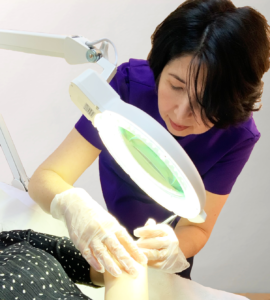 I can often identify xanthelasma quickly during an initial consultation, explaining exactly what it is, what it isn’t, and whether further medical input is advisable. For many people, that clarity alone is a relief. There is no pressure to proceed, and nothing needs to be decided on the spot.
When removal is appropriate, it is often far more straightforward than expected. Treatment is precise and controlled, designed to respect the delicacy of the eye area. There is no cutting, no stitches, and no dramatic downtime. The aim is simply to allow the skin to heal naturally, with as little disruption as possible.

There’s a common assumption that anything around the eyes must automatically involve hospital referrals or long waiting lists. While dermatologists play an essential role where diagnosis is uncertain or medical investigation is needed, clearly identified xanthelasma can often be treated safely and effectively without that level of intervention. For many people, this means faster reassurance and gentler options.
What’s striking is how often clients describe a sense of quiet self-consciousness before treatment — not something they talk about openly, but something that subtly affects how they feel about their appearance. After removal, the change is rarely dramatic in an obvious way. Instead, it’s subtle and reassuring. The eye area looks calmer. The face feels more familiar again. Attention shifts away from the patch and back to the person.
Healing is usually straightforward, involving mild redness and a small area of natural repair that settles over time. The goal isn’t perfection or turning back the clock. It’s about restoring balance and comfort, and removing something that has been quietly bothering someone for far longer than they realised.
Xanthelasma may be common, but that doesn’t mean it should be ignored if it causes concern or affects confidence. Skin changes around the eyes carry an emotional weight that’s easy to underestimate. The important thing is knowing that reassurance is accessible, treatment can be gentle, and nothing has to be rushed.
Sometimes peace of mind comes from understanding what you’re seeing. And sometimes, it comes from realising that the thing you’ve been carefully working around in the mirror doesn’t actually have to stay.
There’s a particular type of skin change that tends to appear slowly and without warning, often right at the inner corners of the eyes. It isn’t painful. It doesn’t itch. It doesn’t behave like a spot or a rash. Instead, it settles in quietly, soft and slightly raised, with a yellowish or creamy tone that doesn’t quite match the surrounding skin. Xanthelasma (zan-the-las-ma) is one of those conditions many people notice long before they understand what it is.
Because it develops around the eyes, it tends to feel more exposed than most skin changes. People often first notice it while applying makeup, removing mascara, or seeing a close-up photo of themselves. At first, it’s easy to assume it’s temporary — perhaps a reaction, a bit of pigmentation, or even tired skin. But unlike most things around the eye area, it doesn’t fade. It stays.
Xanthelasma is a benign build-up of fatty deposits under the skin, most commonly appearing on the upper or lower eyelids, or both. It is not cancerous and not contagious, but its appearance can be unsettling precisely because it sits in such a visible place. Many people worry that it signals something serious, or that it reflects poor health or lifestyle choices. In reality, it’s often far more complex — and far less personal — than that.
For some, xanthelasma is linked to cholesterol levels. For others, it appears despite blood tests being completely normal. Genetics can play a role, and age can too, but there is rarely a single clear explanation. What matters most is that its presence does not mean someone has done something wrong. It’s simply one of the ways skin can change over time.
That uncertainty, however, can linger. Because xanthelasma doesn’t fit neatly into familiar categories, many people sit with unanswered questions for years. Is it safe? Will it grow? Does it need a doctor? Is removal risky so close to the eyes? And, quietly beneath all of that, there’s often a more personal concern — will it keep drawing attention every time I look in the mirror?
What makes xanthelasma particularly frustrating is that it doesn’t behave like ordinary surface pigmentation. It sits beneath the skin, giving it a soft, padded look that can’t be covered easily with makeup and doesn’t respond to creams or home remedies. Because the skin around the eyes is so delicate, people are often understandably wary of doing anything at all.
In practice, reassurance usually comes first. As a trained advanced electrologist, I can often identify xanthelasma quickly during an initial consultation, explaining exactly what it is, what it isn’t, and whether further medical input is advisable. For many people, that clarity alone is a relief. There is no pressure to proceed, and nothing needs to be decided on the spot.
When removal is appropriate, it is often far more straightforward than expected. Treatment is precise and controlled, designed to respect the delicacy of the eye area. There is no cutting, no stitches, and no dramatic downtime. The aim is simply to allow the skin to heal naturally, with as little disruption as possible.
There’s a common assumption that anything around the eyes must automatically involve hospital referrals or long waiting lists. While dermatologists play an essential role where diagnosis is uncertain or medical investigation is needed, clearly identified xanthelasma can often be treated safely and effectively without that level of intervention. For many people, this means faster reassurance and gentler options.
What’s striking is how often clients describe a sense of quiet self-consciousness before treatment — not something they talk about openly, but something that subtly affects how they feel about their appearance. After removal, the change is rarely dramatic in an obvious way. Instead, it’s subtle and reassuring. The eye area looks calmer. The face feels more familiar again. Attention shifts away from the patch and back to the person.
Healing is usually straightforward, involving mild redness and a small area of natural repair that settles over time. The goal isn’t perfection or turning back the clock. It’s about restoring balance and comfort, and removing something that has been quietly bothering someone for far longer than they realised.
Xanthelasma may be common, but that doesn’t mean it should be ignored if it causes concern or affects confidence. Skin changes around the eyes carry an emotional weight that’s easy to underestimate. The important thing is knowing that reassurance is accessible, treatment can be gentle, and nothing has to be rushed.
Sometimes peace of mind comes from understanding what you’re seeing. And sometimes, it comes from realising that the thing you’ve been carefully working around in the mirror doesn’t actually have to stay.
There’s a particular type of skin change that tends to appear slowly and without warning, often right at the inner corners of the eyes. It isn’t painful. It doesn’t itch. It doesn’t behave like a spot or a rash. Instead, it settles in quietly, soft and slightly raised, with a yellowish or creamy tone that doesn’t quite match the surrounding skin. Xanthelasma (zan-the-las-ma) is one of those conditions many people notice long before they understand what it is.
Because it develops around the eyes, it tends to feel more exposed than most skin changes. People often first notice it while applying makeup, removing mascara, or seeing a close-up photo of themselves. At first, it’s easy to assume it’s temporary — perhaps a reaction, a bit of pigmentation, or even tired skin. But unlike most things around the eye area, it doesn’t fade. It stays.
Xanthelasma is a benign build-up of fatty deposits under the skin, most commonly appearing on the upper or lower eyelids, or both. It is not cancerous and not contagious, but its appearance can be unsettling precisely because it sits in such a visible place. Many people worry that it signals something serious, or that it reflects poor health or lifestyle choices. In reality, it’s often far more complex — and far less personal — than that.
For some, xanthelasma is linked to cholesterol levels. For others, it appears despite blood tests being completely normal. Genetics can play a role, and age can too, but there is rarely a single clear explanation. What matters most is that its presence does not mean someone has done something wrong. It’s simply one of the ways skin can change over time.
That uncertainty, however, can linger. Because xanthelasma doesn’t fit neatly into familiar categories, many people sit with unanswered questions for years. Is it safe? Will it grow? Does it need a doctor? Is removal risky so close to the eyes? And, quietly beneath all of that, there’s often a more personal concern — will it keep drawing attention every time I look in the mirror?
What makes xanthelasma particularly frustrating is that it doesn’t behave like ordinary surface pigmentation. It sits beneath the skin, giving it a soft, padded look that can’t be covered easily with makeup and doesn’t respond to creams or home remedies. Because the skin around the eyes is so delicate, people are often understandably wary of doing anything at all.
In practice, reassurance usually comes first. As a trained advanced electrologist, I can often identify xanthelasma quickly during an initial consultation, explaining exactly what it is, what it isn’t, and whether further medical input is advisable. For many people, that clarity alone is a relief. There is no pressure to proceed, and nothing needs to be decided on the spot.
When removal is appropriate, it is often far more straightforward than expected. Treatment is precise and controlled, designed to respect the delicacy of the eye area. There is no cutting, no stitches, and no dramatic downtime. The aim is simply to allow the skin to heal naturally, with as little disruption as possible.
There’s a common assumption that anything around the eyes must automatically involve hospital referrals or long waiting lists. While dermatologists play an essential role where diagnosis is uncertain or medical investigation is needed, clearly identified xanthelasma can often be treated safely and effectively without that level of intervention. For many people, this means faster reassurance and gentler options.
What’s striking is how often clients describe a sense of quiet self-consciousness before treatment — not something they talk about openly, but something that subtly affects how they feel about their appearance. After removal, the change is rarely dramatic in an obvious way. Instead, it’s subtle and reassuring. The eye area looks calmer. The face feels more familiar again. Attention shifts away from the patch and back to the person.
Healing is usually straightforward, involving mild redness and a small area of natural repair that settles over time. The goal isn’t perfection or turning back the clock. It’s about restoring balance and comfort, and removing something that has been quietly bothering someone for far longer than they realised.
Xanthelasma may be common, but that doesn’t mean it should be ignored if it causes concern or affects confidence. Skin changes around the eyes carry an emotional weight that’s easy to underestimate. The important thing is knowing that reassurance is accessible, treatment can be gentle, and nothing has to be rushed.
Sometimes peace of mind comes from understanding what you’re seeing. And sometimes, it comes from realising that the thing you’ve been carefully working around in the mirror doesn’t actually have to stay.
There’s a particular type of skin change that tends to appear slowly and without warning, often right at the inner corners of the eyes. It isn’t painful. It doesn’t itch. It doesn’t behave like a spot or a rash. Instead, it settles in quietly, soft and slightly raised, with a yellowish or creamy tone that doesn’t quite match the surrounding skin. Xanthelasma (zan-the-las-ma) is one of those conditions many people notice long before they understand what it is.
Because it develops around the eyes, it tends to feel more exposed than most skin changes. People often first notice it while applying makeup, removing mascara, or seeing a close-up photo of themselves. At first, it’s easy to assume it’s temporary — perhaps a reaction, a bit of pigmentation, or even tired skin. But unlike most things around the eye area, it doesn’t fade. It stays.
Xanthelasma is a benign build-up of fatty deposits under the skin, most commonly appearing on the upper or lower eyelids, or both. It is not cancerous and not contagious, but its appearance can be unsettling precisely because it sits in such a visible place. Many people worry that it signals something serious, or that it reflects poor health or lifestyle choices. In reality, it’s often far more complex — and far less personal — than that.
For some, xanthelasma is linked to cholesterol levels. For others, it appears despite blood tests being completely normal. Genetics can play a role, and age can too, but there is rarely a single clear explanation. What matters most is that its presence does not mean someone has done something wrong. It’s simply one of the ways skin can change over time.
That uncertainty, however, can linger. Because xanthelasma doesn’t fit neatly into familiar categories, many people sit with unanswered questions for years. Is it safe? Will it grow? Does it need a doctor? Is removal risky so close to the eyes? And, quietly beneath all of that, there’s often a more personal concern — will it keep drawing attention every time I look in the mirror?
What makes xanthelasma particularly frustrating is that it doesn’t behave like ordinary surface pigmentation. It sits beneath the skin, giving it a soft, padded look that can’t be covered easily with makeup and doesn’t respond to creams or home remedies. Because the skin around the eyes is so delicate, people are often understandably wary of doing anything at all.
In practice, reassurance usually comes first. As a trained advanced electrologist, I can often identify xanthelasma quickly during an initial consultation, explaining exactly what it is, what it isn’t, and whether further medical input is advisable. For many people, that clarity alone is a relief. There is no pressure to proceed, and nothing needs to be decided on the spot.
When removal is appropriate, it is often far more straightforward than expected. Treatment is precise and controlled, designed to respect the delicacy of the eye area. There is no cutting, no stitches, and no dramatic downtime. The aim is simply to allow the skin to heal naturally, with as little disruption as possible.
There’s a common assumption that anything around the eyes must automatically involve hospital referrals or long waiting lists. While dermatologists play an essential role where diagnosis is uncertain or medical investigation is needed, clearly identified xanthelasma can often be treated safely and effectively without that level of intervention. For many people, this means faster reassurance and gentler options.
What’s striking is how often clients describe a sense of quiet self-consciousness before treatment — not something they talk about openly, but something that subtly affects how they feel about their appearance. After removal, the change is rarely dramatic in an obvious way. Instead, it’s subtle and reassuring. The eye area looks calmer. The face feels more familiar again. Attention shifts away from the patch and back to the person.
Healing is usually straightforward, involving mild redness and a small area of natural repair that settles over time. The goal isn’t perfection or turning back the clock. It’s about restoring balance and comfort, and removing something that has been quietly bothering someone for far longer than they realised.
Xanthelasma may be common, but that doesn’t mean it should be ignored if it causes concern or affects confidence. Skin changes around the eyes carry an emotional weight that’s easy to underestimate. The important thing is knowing that reassurance is accessible, treatment can be gentle, and nothing has to be rushed.
Sometimes peace of mind comes from understanding what you’re seeing. And sometimes, it comes from realising that the thing you’ve been carefully working around in the mirror doesn’t actually have to stay.